
Pretty Cat Things That Don’t Ruin Your Room
A GoodCat guide to choosing cat beds, scratchers, bowls, toys, and everyday essentials that feel at home in your home.
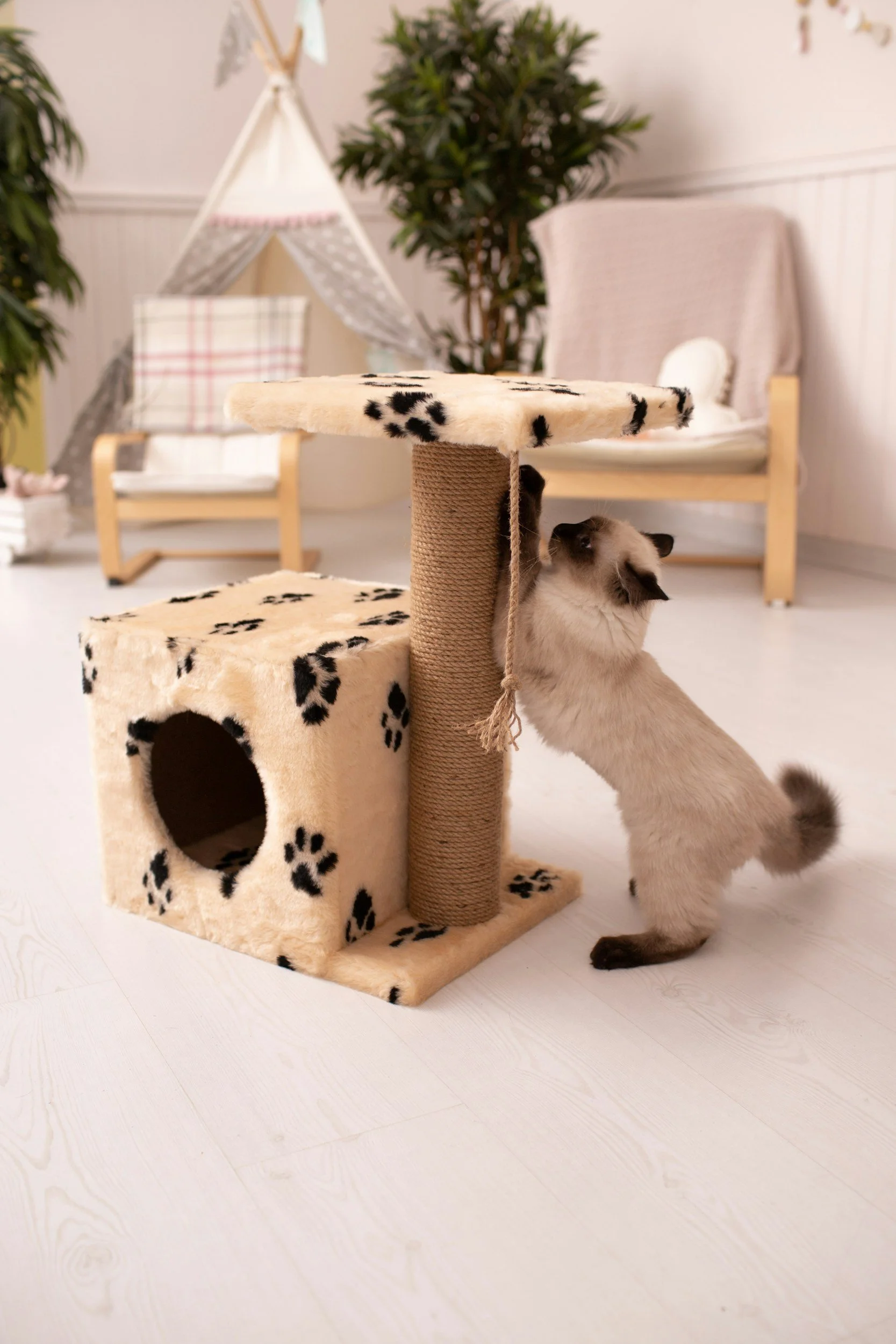
Cats make a house warmer, funnier, sweeter, and much more alive.
They also come with things: beds, bowls, toys, litter mats, scratchers, tunnels, blankets, brushes, treat jars, and mysterious little mice that somehow end up under the sofa.
It is very easy for cat supplies to take over a room.
But cat things do not have to make your home feel cluttered, chaotic, or covered in neon paw prints. With a little thought, you can choose pieces that are useful for your cat and still pleasant for you to live with every day.
This guide is not about having a perfect house. Cats are real. Homes are real. Life with cats includes fur, cardboard boxes, favorite blankets, and the occasional toy in the hallway.
The goal is gentler than perfection: a home that works for your cat and still feels like you.
In this guide
Choosing cat things that fit your home
Pretty cat beds and blankets
Scratchers that look intentional
Food and water areas that feel tidy
Toy storage that keeps the room calm
Litter-area basics that blend in better
When practical matters more than pretty
1. Start with your room, not the product
Before buying another cat item, look at the room where it will live.
What colors are already there? Is the room soft and cottage-like, clean and modern, warm and wood-toned, colorful and playful, or simple and neutral? Do you prefer pale colors, natural textures, vintage details, or things that disappear quietly into the background?
A cat bed, scratcher, or bowl that looks beautiful online may still feel wrong if it clashes with the space around it. The easiest way to make cat supplies look better is to choose them as part of the room, not as random add-ons.
You do not need everything to match perfectly. You just want the pieces to feel like they belong.
GoodCat Tip
Choose cat supplies the way you would choose small home decor: by color, texture, scale, and where they will actually live.
2. Choose a simple color palette
One reason pet supplies can look messy is that they often come in many bright, unrelated colors. A red toy basket, blue bowl, green scratcher, purple blanket, and orange tunnel can make a calm room feel busy fast.
A simple color palette helps.
Good choices for many homes include:
cream
white
beige
soft gray
pale blue
sage green
dusty pink
warm tan
natural wood
woven textures
You do not have to avoid color. Just choose colors intentionally. A pale blue bowl, a cream blanket, and a natural woven basket will usually feel calmer together than five unrelated colors scattered around the room.
If you love bright colors, you can still make them work. The key is repetition. A cheerful red cat bed can look intentional if there are already red accents in the room.
3. Pick cat beds that look like part of the furniture
A cat bed is often one of the most visible cat items in a room, so it is worth choosing carefully.
Look for beds that feel like they belong near your sofa, reading chair, bed, or window. Soft neutrals, washable fabrics, simple shapes, and natural textures are usually easier to live with than loud prints or bulky novelty shapes.
Pretty cat bed ideas include:
a simple round bed in a calm color
a washable fleece or sherpa bed
a basket-style bed with a soft cushion
a small upholstered bed that echoes your furniture
a window perch with a neutral cushion
a folded blanket in a favorite sunny spot
Of course, cats do not always care what we think is pretty. Sometimes they choose the cardboard box. Sometimes they sleep beside the bed, not in it. That is part of the comedy of cat life.
So when possible, choose beds that are both attractive and easy to move around.
GoodCat Tip
A pretty cat bed is only useful if your cat actually wants to sleep in it. Comfort comes first.
4. Use blankets as the easiest design trick
A soft blanket may be the simplest way to make a cat area look intentional.
If your cat loves a chair, window bench, sofa corner, or bed pillow, adding a washable blanket can protect the furniture while making the spot look cozy instead of messy.
Blankets are also easier to clean than furniture. You can rotate them, wash them, fold them neatly, or choose colors that blend into the room.
Good blanket choices:
washable throws
small fleece blankets
cotton quilts
soft towels for hidden areas
neutral pet blankets
pretty old blankets you do not mind sharing
This is one place where you may not need to buy anything new. Many cats are perfectly happy with a folded blanket you already own.
5. Choose scratchers that look intentional
Every cat home needs scratching options. Scratching is not a bad habit; it is normal cat behavior. Cats scratch to stretch, mark territory, care for their claws, and feel good in their bodies.
The design challenge is choosing scratchers you can live with.
Some scratchers are very bright or flimsy-looking. Others are simple enough to blend into a room. Look for materials and shapes that feel closer to home decor: cardboard in neutral tones, sisal, wood, woven textures, or simple vertical posts.
Good options include:
a neutral cardboard scratcher
a simple sisal post
a small cat tree in a soft color
a wall-mounted scratcher
a scratcher-lounger that looks like a low sculptural piece
a scratching pad tucked near a favorite chair
The best scratcher is one your cat will use. If your cat loves horizontal scratching, a vertical post may not solve the problem. If your cat stretches high, a tiny floor pad may not be enough.
Pretty is nice. Function is non-negotiable.
GoodCat Tip
Choose scratchers by your cat’s scratching style first, then by your room’s style.
6. Make the food and water area feel calm
Food and water bowls are small, but they can make a room feel cluttered if they are placed randomly or surrounded by spills.
A simple mat or tray can make a big difference. It creates a defined feeding area, catches crumbs or water drops, and makes the setup look deliberate.
For a prettier feeding area, consider:
simple ceramic or stainless steel bowls
a low-profile feeding mat
a small tray under bowls
a water fountain in a neutral color
a washable mat that matches the floor or cabinets
a dedicated corner rather than a walkway
Try not to place food and water directly beside the litter box. Many cats prefer separation between eating, drinking, and bathroom areas.
A calm feeding area does not need to be fancy. It just needs to be clean, accessible, and easy to maintain.
7. Hide the toy chaos without hiding the toys
Cat toys have a way of spreading. A few mice become twelve mice. A wand toy appears in the hallway. A crinkle ball rolls under the cabinet. Somehow there is always one toy in the exact place where your foot wants to be.
A small toy basket can help.
Choose a basket, bin, or box that fits your room, then keep most toys there when they are not being used. Leave out a few favorites and rotate the rest. This keeps the room calmer and can make old toys feel new again.
Pretty toy storage ideas:
a small woven basket
a fabric bin
a wooden box
a low tray
a lidded container for extra toys
a wall hook for wand toys
For wand toys, hanging them neatly can be better than stuffing them into a basket where the strings can easily tangle.
GoodCat Tip
A few toys left out feel playful. Every toy left out can feel like clutter.
8. Make the litter area as pleasant as possible
The litter box will never be the prettiest part of cat life, but it does not have to ruin a room.
Start with the basics: a box your cat will actually use, a litter they tolerate, and a location that feels safe and accessible. After that, you can make the area look calmer.
Helpful options include:
a litter mat in a neutral color
a simple scoop holder
a small covered trash can nearby
a washable rug or mat under the box
a screen, cabinet, or enclosure if your cat accepts it
a quiet location away from food and water
Be careful with litter-box furniture. Some pieces look beautiful, but not every cat likes using an enclosed or hidden box. If your cat avoids it, the pretty cabinet is not helping.
For many cats, a simple open litter box in a clean, quiet location is better than a stylish setup they do not trust.
GoodCat Tip
With litter boxes, cat approval matters more than human decor approval.
9. Use baskets and trays to create little cat zones
One of the easiest ways to make cat supplies look better is to group them.
Instead of having a brush on one table, treats on another, toys on the floor, and a blanket half-falling off a chair, create small zones.
For example:
a cozy window zone with a blanket, perch, and scratcher
a feeding zone with bowls, mat, and food container nearby
a grooming zone with brush, wipes, and nail clippers in a small basket
a play zone with toy basket and wand hook
a quiet rest zone with bed and blanket
Grouping makes things feel intentional. It also makes it easier to clean.
10. Let useful things be visible if they are beautiful enough
Some practical things are nice enough to leave out.
A pretty brush in a small dish, a ceramic treat jar, a woven toy basket, a soft blanket, or a simple wooden scratcher can become part of the room. You do not need to hide every sign that a cat lives there.
In fact, a few visible cat things can make a home feel warmer and more loved.
The trick is choosing which things deserve to be seen.
Ask:
Is it useful?
Is it easy to clean?
Does it fit the room?
Does my cat actually use it?
Would I mind seeing it every day?
If the answer is yes, it can probably stay out.
11. Know when pretty is not the priority
There are times when the most beautiful option is not the right one.
For example:
A senior cat may need a low-sided litter box, even if it is not stylish.
A nervous cat may need an open litter box rather than a hidden cabinet.
A strong scratcher may need to be large, sturdy, and very visible.
A messy eater may need a practical mat more than a delicate setup.
A cat recovering from illness may need washable, simple, accessible items.
This is where good cat design begins: not with the room, but with the cat.
A beautiful home for cats is one where the cats can actually live well.
GoodCat Tip
The prettiest cat thing is the one that helps your cat feel comfortable, safe, and understood.
12. A cat-friendly home can still feel like your home
Living with cats means accepting a little softness around the edges. There may be fur on the chair. There may be a toy under the table. There may be a cardboard box you meant to throw away two weeks ago, but your cat has clearly claimed it as real estate.
That does not mean your home is ruined.
It means your home is shared.
With a few thoughtful choices, cat supplies can blend into your rooms instead of fighting with them. Choose calm colors, natural textures, washable materials, useful storage, and pieces that respect your cat’s real habits.
The goal is not a perfect showroom.
The goal is a home that feels peaceful, lived-in, and loved — by both the humans and the cats who supervise them.
GoodCat note
GoodCat believes cat homes can be practical, pretty, and full of heart. As we grow, part of our hope is to support local shelters and the cats still waiting for homes of their own.
Every cat is a GoodCat!