
What to Put in a Cat Comfort Corner
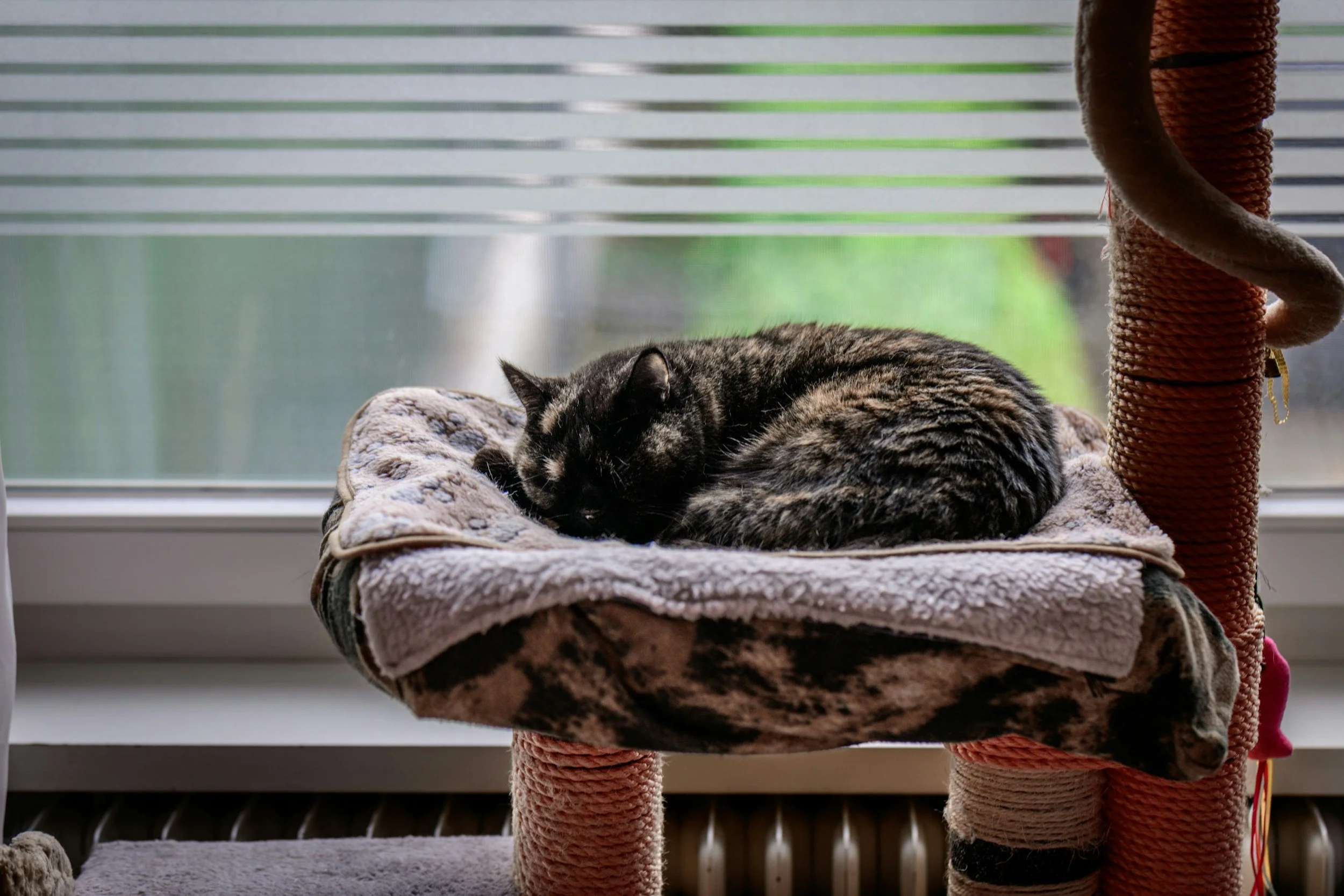
A GoodCat guide to creating a soft, safe little space where your cat can rest, hide, watch, scratch, and feel at home.
Every cat deserves a place that feels like theirs.
Not necessarily a whole room. Not necessarily an elaborate cat wall or a perfect designer setup. Sometimes a comfort corner is simply a quiet spot beside a chair, a sunny window nook, a soft blanket under a table, or a little bed tucked where your cat already likes to be.
A cat comfort corner is a small, thoughtful space that says: you can rest here, hide here, stretch here, watch from here, and be left in peace when you need to be.
It can be especially helpful for shy cats, senior cats, newly adopted cats, indoor cats, or any cat who likes having a predictable little home base.
But really, most cats appreciate a place that belongs to them.
In this guide
Choosing the right spot
What to include in a comfort corner
Beds, blankets, and hiding places
Scratching and stretching options
Toys, grooming, and cozy extras
Comfort corners for shy, senior, or newly adopted cats
Keeping the space simple and easy to clean
1. Start with the place your cat already chooses
Before you create a comfort corner, watch your cat.
Where do they naturally rest? Where do they hide when the house is busy? Where do they nap in the afternoon? Where do they stretch after waking up? Where do they sit to watch you without being right in the middle of everything?
Your cat may already be showing you the right place.
Good comfort-corner spots can include:
beside a favorite chair
near a sunny window
under a quiet table
in a calm bedroom corner
near a bookshelf
beside your desk
in a low-traffic hallway nook
near a safe window view
in the room where the family spends time, but slightly off to the side
The best spot is usually close enough for your cat to feel included, but not so busy that they feel crowded.
GoodCat Tip
A comfort corner works best when it begins with your cat’s habits, not just your decorating plan.
2. Choose calm over fancy
A comfort corner does not need to be impressive. It needs to feel safe and usable.
Cats often prefer simple, predictable spaces. A soft blanket in the right place may be more valuable than an elaborate setup in a spot they do not like.
Try to choose a place that is:
quiet enough for rest
easy for your cat to reach
away from heavy foot traffic
not too close to loud appliances
safe from drafts or overheating
easy for you to clean
comfortable for your cat’s age and mobility
If you have other pets, make sure the corner does not trap your cat. A good comfort spot should have a way in and a way out.
Comfort is not just softness. It is also choice.
3. Add a soft resting place
The heart of most comfort corners is a soft place to rest.
This might be:
a cat bed
a folded blanket
a small quilt
a washable cushion
a fleece mat
a towel inside a basket
a soft pad on a bench or windowsill
Washable is helpful. Cats bring fur, litter dust, crumbs, mystery debris, and the occasional surprise to their favorite spots. A washable blanket or cover keeps the corner easier to maintain.
Some cats love round beds. Some prefer flat blankets. Some like bolstered sides. Some ignore the beautiful bed and sleep beside it with great conviction.
That is okay. Start simple and let your cat vote.
GoodCat Tip
The best bed is the one your cat actually uses, even if it was not the one you expected.
4. Include a hiding option
A comfort corner should offer at least a little privacy.
For many cats, a hiding place is not a sign that something is wrong. It is part of how they relax. A semi-hidden space can help a cat feel secure, especially in a busy household.
Good hiding options include:
a covered cat bed
a cardboard box with a blanket inside
a basket turned partly sideways
a cat tunnel
a blanket draped over a chair
an open carrier with a soft towel
a small space under a table
If your cat is newly adopted or nervous, avoid hiding spots where you would have to drag them out. Choose something safe, accessible, and easy to monitor.
A good hiding place gives privacy without creating a problem.
5. Add something to scratch
A comfort corner is a natural place for scratching.
Many cats like to scratch after sleeping, stretching, or feeling happy. If your comfort corner includes a bed or blanket, a nearby scratcher can help your cat wake up their body and mark the area as their own.
Good choices include:
a small cardboard scratcher
a horizontal scratching pad
a sisal post
an angled scratcher
a scratcher-lounger
a small cat tree with a scratching surface
Choose the type that matches your cat’s scratching style. If your cat likes full-body vertical stretching, a tiny floor pad may not be enough. If they love scratching rugs, a horizontal scratcher may make more sense.
GoodCat Tip
A comfort corner should give your cat a place to stretch, scratch, and settle.
6. Give them something to watch
Cats often like comfort spots that come with a view.
The view does not have to be dramatic. It might be a window, a doorway, the kitchen, your desk, the living room, or a quiet corner where they can keep an eye on the household.
A good view lets your cat feel involved without being overwhelmed.
If possible, place the comfort corner where your cat can:
watch birds or trees
see you nearby
observe the room
look out from a safe distance
rest without being startled from behind
For shy cats, being able to watch without participating can be very reassuring.
For social cats, a comfort corner near family activity may help them feel included while still having their own spot.
7. Add one or two quiet toys
A comfort corner does not need to become a toy explosion.
One or two quiet toys can be enough. Think soft, safe, and easy to enjoy without turning the corner into clutter.
Good options include:
a soft mouse
a kicker toy
a crinkle toy, if your cat enjoys it
a small ball
a catnip toy, if your cat likes catnip
a puzzle toy used nearby and then put away
Wand toys are wonderful, but they are usually better stored out of reach and used during supervised play. Strings and ribbons should not be left where a cat might chew or swallow them.
The comfort corner should feel restful, not chaotic.
8. Consider a small grooming or care basket
If your cat enjoys brushing or gentle care, you might keep a small basket nearby with a few basics.
This could include:
a soft brush
grooming wipes, if appropriate
nail clippers, stored safely
a lint roller for the human furniture
a small towel
treats used for calm handling
This is optional. Some cats do not want grooming associated with their comfort spot, especially if they dislike brushing or nail trims.
If your cat loves being brushed, a little care basket can make the corner feel like a cozy bonding place. If your cat is suspicious of grooming tools, keep them somewhere else.
GoodCat Tip
A comfort corner should not feel like a trap. Only keep grooming items nearby if your cat finds them pleasant or neutral.
9. Think about senior cats and cats with mobility needs
For older cats or cats with mobility issues, comfort means access.
A beautiful perch is not helpful if the cat cannot reach it safely. A deep bed may not be comfortable if stepping over the edge is difficult. A high windowsill may need a step or lower alternative.
For senior or less mobile cats, consider:
low-sided beds
flat blankets
pet steps or a low bench
non-slip mats
easy access to food, water, and litter nearby if needed
warmth without overheating
soft surfaces that are easy to step onto
If your cat has arthritis, pain, illness, or sudden behavior changes, it is wise to check with your veterinarian. Comfort at home matters, but health issues deserve proper care.
10. Make it beautiful, but not precious
A cat comfort corner can absolutely be pretty.
You might choose soft colors, a woven basket, a pale blanket, a simple wood scratcher, a little cushion, or a corner that blends into your room. It can feel like part of your home rather than a pile of pet supplies.
GoodCat-style comfort-corner ideas:
a cream blanket beside a reading chair
a sage green bed near a sunny window
a woven basket with a washable cushion
a pale blue mat under a small scratcher
a soft quilt on a bench
a small toy basket tucked nearby
But do not make the corner so precious that your cat cannot be a cat there.
Cats shed. They knead. They scratch. They rearrange blankets. They bring toys. They choose the least photogenic position possible and make it sacred.
A comfort corner should be lovely enough for you and relaxed enough for them.
11. Keep food and litter separate unless there is a special reason
In most homes, a comfort corner does not need to include food, water, or a litter box.
Cats usually prefer eating, drinking, resting, and bathroom areas to have some separation. A comfort corner is often best as a resting, watching, scratching, and quiet-play area.
There are exceptions. A senior, ill, disabled, or newly confined cat may need essentials closer together for practical reasons. In that case, function comes first.
For a typical comfort corner, though, keep it simple:
rest
hide
scratch
watch
play lightly
That is enough.
GoodCat Tip
A comfort corner does not need everything. It just needs the right few things.
12. Let the corner change over time
Your cat’s preferences may change.
A kitten may want play and climbing. An adult cat may want a window and a scratcher. A senior cat may want warmth, softness, and easy access. A shy cat may need more hiding at first and more openness later.
You can adjust the corner as your cat teaches you what they like.
Try changing one thing at a time:
move the bed slightly
swap the blanket
add a scratcher
remove a toy that creates clutter
move the setup closer to a window
make access easier
add more privacy
Small changes are usually better than constant rearranging. Cats often like familiar places.
13. A comfort corner is really about belonging
A comfort corner is not just a cute cat setup.
It is a way of making space for your cat’s needs inside your shared home.
It says: you are allowed to rest here. You are allowed to hide. You are allowed to watch. You are allowed to have preferences. You are part of this household, and your comfort matters.
That is a small thing and a big thing at the same time.
Final thoughts
A cat comfort corner does not have to be expensive, elaborate, or perfect.
Start with a quiet spot your cat already likes. Add something soft, something safe, something to scratch, a little privacy, and maybe a view. Keep it simple enough to clean and flexible enough to change.
The best comfort corners are made by paying attention.
At GoodCat, we believe cats deserve homes that understand them — homes with soft places to land, safe places to hide, and little corners that say: you belong here.
Every cat is a GoodCat.