
The Gentle Cat Lover’s Guide to Scratching
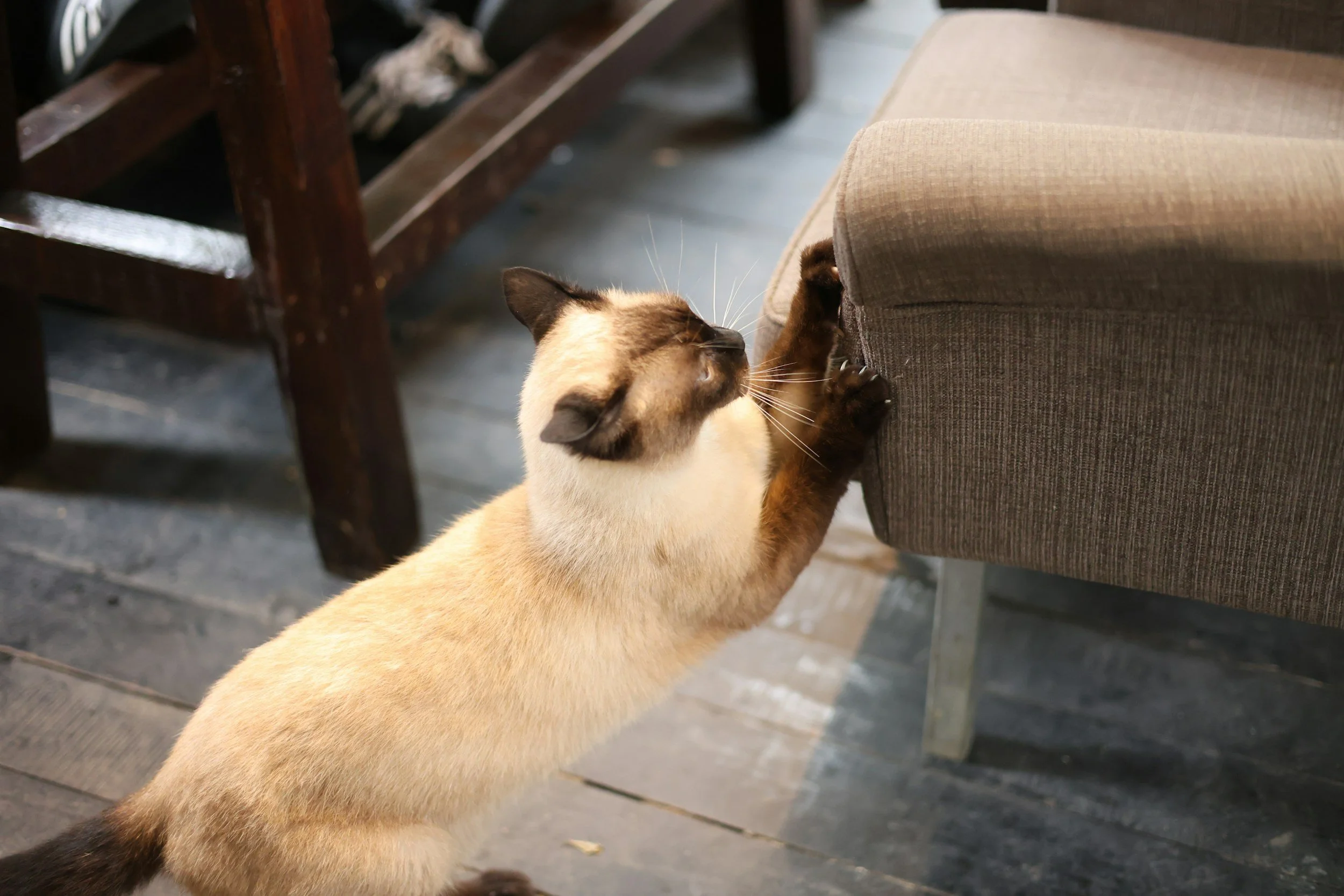
A GoodCat guide to understanding why cats scratch, what they need, and how to protect your furniture without blaming your cat.
Scratching is one of the most normal things a cat can do.
It is also one of the things that can make a human stand in the living room saying, “Please, not the sofa,” while a cat looks directly into their soul and continues anyway.
But cats do not scratch because they are bad, spiteful, or trying to ruin the furniture. Scratching is part of being a cat. It helps them stretch, care for their claws, mark their territory, release energy, and feel at home in their space.
The goal is not to stop a cat from scratching.
The goal is to give them better places to scratch.
In this guide
Why cats scratch
How to notice your cat’s scratching style
Vertical vs. horizontal scratchers
Where to place scratchers
How to make scratchers more appealing
How to protect furniture gently
What not to do when your cat scratches
1. Scratching is communication, exercise, and self-care
To humans, scratching may look like destruction. To cats, it is useful and meaningful.
Cats scratch to:
stretch their muscles
shed the outer layers of their claws
mark familiar places with scent from their paws
leave a visible mark that says, “I was here”
release excitement or stress
wake up their bodies after sleeping
feel secure in their territory
This is why scratching often happens in important places: near a sofa, beside a doorway, close to a sleeping spot, or in the middle of family life. Your cat is not necessarily choosing those places to annoy you. They may be choosing them because those places matter.
GoodCat Tip
Scratching is not a bad habit. It is a normal need that deserves a better outlet.
2. Notice what your cat already prefers
Before buying a new scratcher, watch your cat.
Cats have preferences. One cat may love to stretch tall against a sofa arm. Another may prefer scratching flat cardboard on the floor. Another may like rough sisal. Another may only use the rug, thank you very much.
Look for clues:
Does your cat scratch vertically or horizontally?
Do they like cardboard, fabric, carpet, sisal, wood, or rugs?
Do they stretch high or crouch low?
Do they scratch after waking up?
Do they scratch near doorways?
Do they scratch where people spend time?
Do they scratch when excited?
The more you understand your cat’s style, the easier it is to offer something they will actually use.
A scratcher that looks pretty but does not match your cat’s preferences may simply become a decorative object your cat walks past on the way to the sofa.
3. Choose the right type of scratcher
There are many kinds of scratchers, and the best one depends on the cat.
Common options include:
vertical scratching posts
horizontal cardboard scratchers
angled scratchers
scratcher loungers
sisal mats
wall-mounted scratchers
small cat trees with scratching posts
tall sturdy posts for full-body stretching
If your cat scratches the side of the sofa, try a vertical scratcher near that spot. If your cat scratches the rug, try a horizontal scratcher. If your cat loves stretching upward, choose something tall enough for a full stretch.
Height and sturdiness matter. A tiny, wobbly post may not satisfy a cat who wants to lean in and stretch their whole body.
GoodCat Tip
Match the scratcher to the way your cat already scratches.
4. Put the scratcher where your cat wants to scratch
One of the most common mistakes is putting the scratcher where it looks best to the human, not where it makes sense to the cat.
If your cat scratches the sofa, putting a scratcher in a back hallway may not help. Your cat already told you the sofa area matters.
Try placing scratchers:
near the furniture your cat targets
beside a favorite sleeping spot
near a doorway or room entrance
in the room where the family spends time
near a window perch
wherever your cat naturally stretches after a nap
Once your cat is reliably using the scratcher, you may be able to slowly move it to a more convenient spot. But at first, place it where the behavior is already happening.
This is not giving in. It is good cat design.
5. Make the scratcher more interesting than the furniture
A new scratcher is not automatically meaningful to your cat. You may need to make it inviting.
You can try:
sprinkling catnip on it, if your cat likes catnip
you can try other cat-safe attractants like silvervine, if appropriate for your cat
playing with a wand toy near it
placing treats nearby
gently scratching it with your own fingers to show the texture
putting it near your cat’s favorite resting area
rewarding your cat when they use it
Avoid forcing your cat’s paws onto the scratcher. Many cats dislike that, and it can make the scratcher feel unpleasant instead of inviting.
Let curiosity do the work when possible.
6. Protect the furniture while your cat learns
Redirecting scratching takes time. While your cat is learning, you can make furniture less appealing and scratchers more appealing.
Gentle furniture-protection ideas include:
placing a scratcher directly in front of the targeted spot
covering the sofa arm temporarily with a blanket or throw
using furniture-safe protective tape if appropriate for the fabric
moving tempting loose fabric out of reach
trimming claws regularly if your cat tolerates it
offering more than one scratching option
The goal is not to punish your cat. The goal is to make the right choice easier and the furniture less satisfying.
If you use any adhesive product, test it carefully and make sure it is safe for your furniture and your cat.
GoodCat Tip
Help your cat succeed by making the scratcher easy and the furniture boring.
7. Keep claws cared for
Regular nail care can reduce damage from scratching, but it does not replace the need to scratch.
Some cats tolerate nail trims well. Others need slow training, gentle handling, or help from a groomer or veterinarian. If your cat is frightened, painful, aggressive, or very resistant, do not turn nail trimming into a battle.
A calm approach may include:
touching paws gently during relaxed moments
trimming only one or two claws at a time
using sharp, cat-appropriate nail clippers
avoiding the quick
offering treats afterward
asking a professional for help if needed
Nail care is part of comfort and safety, but scratching is still normal behavior.
8. Avoid punishment
Punishing a cat for scratching usually does not solve the problem. It may only make the cat afraid, confused, or more secretive.
Try not to:
yell
swat
spray with water
chase the cat away
drag the cat to the scratcher
punish after the fact
Cats do not understand punishment the way humans often hope they will. They are more likely to learn that you are unpredictable than to learn that the sofa is off-limits.
A calmer approach is more effective: interrupt gently if needed, redirect to the scratcher, reward the behavior you want, and adjust the setup.
GoodCat Tip
A cat who feels safe is easier to guide than a cat who feels scared.
9. Offer more than one scratching choice
One scratcher may not be enough, especially in a larger home or a multi-cat household.
Cats often scratch in different places for different reasons. They may want one scratcher near a sleeping spot, another near the sofa, and another near a doorway.
Good combinations might include:
one vertical post and one horizontal cardboard scratcher
one scratcher near the sofa and one near a window
one tall post and one scratcher-lounger
multiple scratchers in a multi-cat home
This does not mean your house has to be full of scratchers. It means your cat should have realistic options where they actually live.
10. Choose scratchers that fit your home too
Cat needs come first, but that does not mean the scratcher has to be ugly.
There are many scratchers that look calmer and more intentional than the old bright, wobbly post in the corner.
Look for:
neutral cardboard scratchers
natural sisal
simple wood bases
cream, beige, gray, or soft-colored materials
sturdy shapes
scratcher-loungers that look like low furniture
cat trees that match the room better
A scratcher you do not mind seeing is more likely to stay in the right place. And the right place is often visible.
GoodCat Tip
The best scratcher works for the cat and can live comfortably in your room.
11. Be patient with the transition
If your cat has been scratching the same sofa for months or years, do not expect one new scratcher to fix everything overnight.
Give it time.
You may need to experiment with:
different materials
different heights
different locations
different angles
more stability
more play around the scratcher
better furniture protection while your cat learns
If one option does not work, it does not mean your cat is impossible. It may just mean that option did not match your cat.
Cats are honest product reviewers.
12. When scratching changes suddenly
If your cat suddenly scratches much more than usual, scratches obsessively, seems anxious, fights with other pets, or targets new areas in a dramatic way, consider what else may be happening.
Changes in scratching can sometimes be related to:
stress
a new pet
moving furniture
a new baby or visitor
changes in routine
outdoor cats near windows
pain or discomfort
not enough outlets for energy
If the change is sudden, intense, or accompanied by other behavior or health changes, it is wise to check with your veterinarian.
Scratching is normal, but a sudden change in behavior is worth noticing.
Final thoughts
A cat who scratches is not a bad cat.
A cat who scratches is being a cat.
When we understand that, the problem becomes less about blame and more about design. Where does the cat need to stretch? What texture do they like? What place matters to them? How can we protect the furniture while giving them something better?
Good cat care often begins with respect for what cats are.
They are not tiny humans. They are not decorations. They are bright, sensitive, opinionated little creatures with claws, instincts, preferences, and reasons.
Give them a good place to scratch, and you are not just saving your sofa.
You are helping your cat feel at home.
Every cat is a GoodCat!