
Simple Ways to Make an Indoor Cat’s Day More Interesting
A GoodCat guide to adding gentle play, comfort, curiosity, and small adventures to your cat’s everyday life.
Indoor cats can live safe, happy, deeply loved lives. They have warm beds, regular meals, protection from traffic and predators, and a human staff that opens cans, cleans boxes, and says things like, “Who’s a good baby?” several times a day.
But indoor life can also become a little too predictable.
A cat’s world is full of instincts: watching, stalking, scratching, climbing, hiding, chasing, sniffing, listening, and solving tiny mysteries. When those instincts do not have enough healthy outlets, some cats become bored, restless, anxious, or a little too creative with the furniture.
The good news is that enrichment does not have to be complicated. You do not need a house full of expensive gadgets. Small, thoughtful changes can make your cat’s day richer, calmer, and more fun.
In this guide
Why indoor cats need enrichment
Easy play ideas
Window watching and cozy perches
Scratching, climbing, and hiding
Food puzzles and treat games
Simple scent and sound enrichment
How to keep things interesting without buying too much
1. Think of enrichment as “cat life,” not entertainment
Enrichment is a formal word, but the idea is simple: give your cat healthy ways to do cat things.
Cats are not meant to sleep all day simply because there is nothing else to do. They are curious, observant, sensitive animals with bodies made to stretch, pounce, scratch, climb, and investigate.
A more interesting indoor day might include:
a window to watch
a scratching place to stretch
a toy to chase
a quiet spot to hide
a high place to perch
a puzzle or treat game
a few minutes of gentle human attention
a predictable routine
You do not need to do everything every day. The goal is to add small moments of interest to your cat’s normal rhythm.
GoodCat Tip
Enrichment does not have to be fancy. It just has to give your cat something safe and satisfying to do.
2. Play in short, focused sessions
Many cats do better with short play sessions than with one long, exhausting session.
Five to ten minutes of focused play can be enough to brighten the day, especially if you play in a way that lets your cat stalk, chase, pounce, and “catch” the toy.
Wand toys are especially useful because they let you move the toy like prey. Try making the toy disappear behind a chair, flutter near the floor, pause, dart away, and then slow down again. Cats often enjoy the chase more when the toy does not simply wave in their face.
Good play has a little drama:
the toy hides
the toy moves
the toy pauses
the cat watches
the cat pounces
the cat catches
Let your cat win sometimes. A game where the cat never catches anything can become frustrating.
3. Give your cat a good window spot
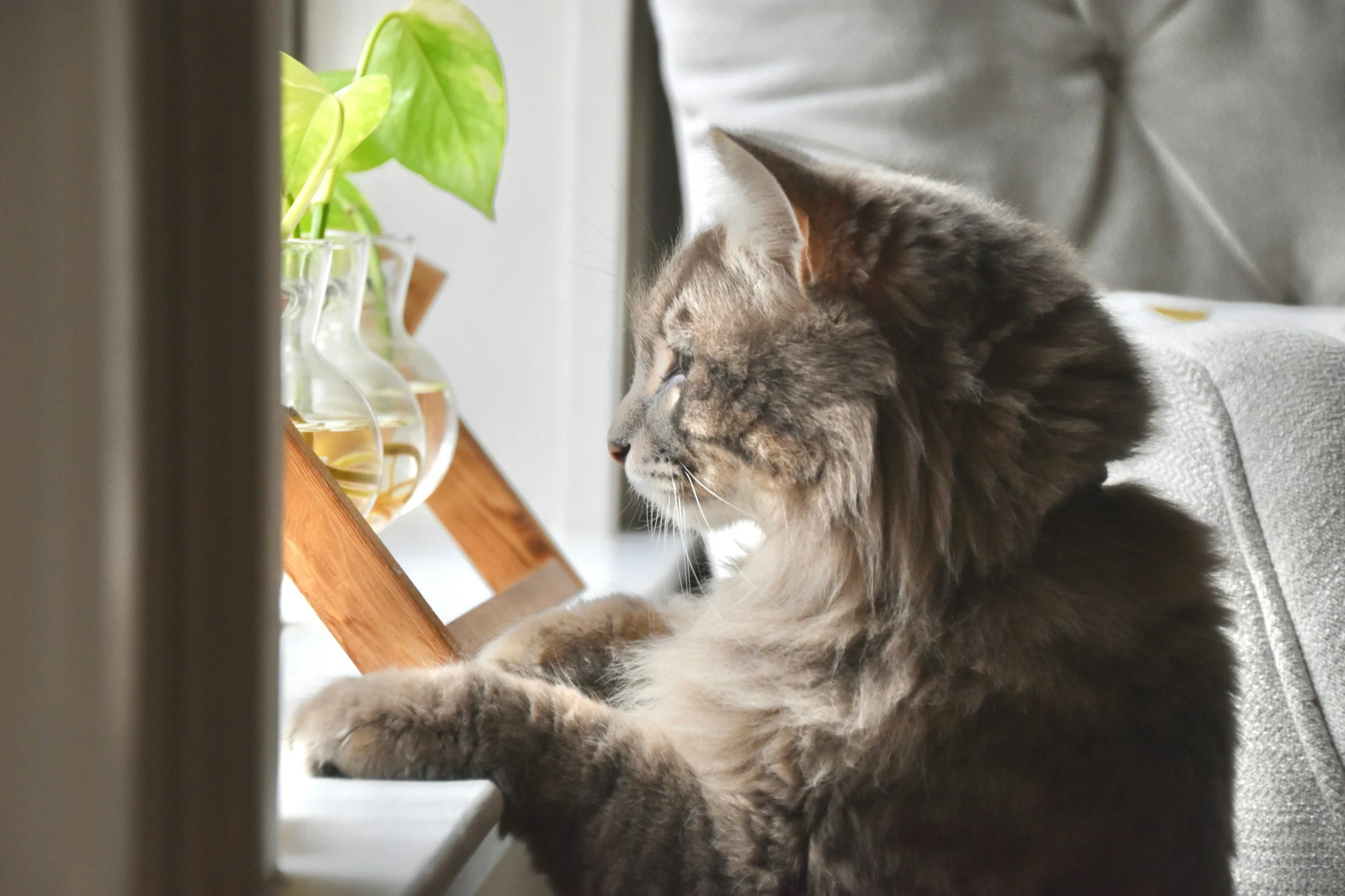
For many indoor cats, a window is not just a window. It is television, theater, neighborhood watch, bird report, weather station, and quiet thinking place.
A cozy window spot can be one of the easiest ways to enrich your cat’s day.
Good window-spot ideas include:
a soft blanket on a windowsill
a stable window perch
a cat tree near a window
a chair or bench your cat is allowed to use
a bird feeder outside the window, if it is safe and appropriate where you live
a sunny resting place with a view
Make sure any perch or furniture near the window is stable. If the window opens, check that screens are secure and the setup is safe.
A window spot is especially helpful for cats who enjoy watching movement but are not always interested in active play.
GoodCat Tip
A safe window view can make an indoor cat’s world feel much bigger.
4. Rotate toys instead of leaving everything out
When every toy is available all the time, toys can become part of the furniture. Your cat may stop noticing them.
Try keeping most toys in a basket or drawer and leaving out only a few at a time. Every few days, switch them. An old toy can feel new again after a little break.
You can rotate:
soft mice
crinkle balls
kicker toys
catnip toys
springs
tunnels
puzzle toys
wand attachments
This also keeps your home calmer and reduces toy clutter.
If your cat has a true favorite, you do not have to hide it. Some cats have one beloved toy that is clearly part of their emotional support staff.
5. Add scratching options in the places your cat actually wants them
Scratching is normal, healthy cat behavior. It helps cats stretch, care for their claws, mark territory, and release energy.
If your cat is scratching furniture, they may not be “bad.” They may simply need a better scratching option in the right place.
Notice what your cat prefers:
horizontal scratching or vertical scratching?
cardboard, sisal, carpet, or wood?
low scratching or a full-body stretch?
scratching near sleeping areas?
scratching near doorways or social areas?
A scratcher hidden in a back room may not help if your cat wants to scratch near the sofa where the family spends time. Try placing scratchers where the behavior naturally happens.
GoodCat Tip
The best scratcher is not just the prettiest one. It is the one your cat will actually use.
6. Create small climbing and perching opportunities
Cats often like to see the world from different heights.
Some cats love tall cat trees. Others prefer a low bench, a sturdy chair, the back of the sofa, a windowsill, or a shelf made safe for them. You do not need to turn your home into a jungle gym unless you want to. Even one or two approved perching places can make a difference.
Perches can help cats feel:
safer
more confident
more involved in household life
less bored
less likely to claim places you would rather keep cat-free
If you have more than one cat, vertical space can also help reduce tension by giving everyone more choices.
Always make sure climbing spots are stable and safe. A wobbly perch is not enrichment. It is a bad idea with fur.
7. Offer hiding places without making the room messy
Hiding places are not only for scared cats. Many confident cats enjoy small, enclosed spaces because they feel cozy and safe.
A good hiding spot can be simple:
a cardboard box
a cat tunnel
a covered bed
a blanket draped over a chair
an open carrier with a soft towel
a basket with a blanket
You can make hiding places look intentional by choosing one or two that fit your room, then rotating others in and out.
Cats often love the things we did not buy for them. A delivery box may be more exciting than the expensive bed that came inside it. This is not failure. This is cat law.
8. Make meals a little more interesting
Food can be part of enrichment, especially for cats who enjoy puzzles or hunting games.
Instead of putting every meal in a bowl, you can occasionally try:
a puzzle feeder
a treat ball
hiding a few treats around a room
placing small portions in different safe spots
using a lick mat with appropriate food
tossing individual treats for your cat to chase
Start easy. A puzzle that is too difficult can frustrate a cat, especially if they are new to it.
For cats with medical issues, special diets, diabetes, food sensitivities, or weight concerns, check with your veterinarian before changing feeding routines or adding treats.
GoodCat Tip
A good food puzzle should make your cat curious, not confused or upset.
9. Use scent carefully
Cats experience the world strongly through scent. A new smell can be interesting, comforting, or overwhelming depending on the cat.
Gentle scent enrichment might include:
catnip toys, if your cat responds to catnip
silvervine toys
a blanket with a familiar scent
a cardboard box from a delivery
supervised sniffing of safe outdoor scents on a shoe mat or windowsill area
Avoid using strong perfumes, essential oils, or heavily scented products around cats. Many cats dislike intense smells, and some substances can be unsafe for them.
Simple is best. Let your cat investigate new scents at their own pace.
10. Add sound and quiet in balanced ways
Some cats enjoy gentle background sound. Others prefer silence.
You can experiment with:
soft music
calm household sounds
bird videos made for cats
quiet talking
leaving a familiar radio or playlist on low volume for short periods
Watch your cat’s body language. If they leave, hide, flatten their ears, or seem unsettled, the sound may be too much.
Enrichment should not overload the senses. A peaceful room with one interesting thing is often better than a noisy room full of stimulation.
11. Give attention in the way your cat prefers
Not every cat wants the same kind of attention.
Some cats want lap time. Some want play. Some want to sit nearby without being touched. Some want a slow blink from across the room and nothing more, thank you very much.
Pay attention to what your cat actually enjoys.
Good forms of attention can include:
brushing, if your cat likes it
sitting together quietly
gentle play
training simple cues with treats
slow blinking
talking softly
letting your cat sit near you while you work or read
Respect matters. A cat who feels listened to is more likely to trust you.
GoodCat Tip
The best attention is the kind your cat would choose too.
12. Keep enrichment simple enough to maintain
It is easy to see elaborate cat rooms online and feel like you are not doing enough. But most cats do not need perfection. They need rhythm, safety, affection, and small opportunities to use their instincts.
A simple weekly enrichment routine might look like this:
a few short play sessions
toy rotation once or twice a week
a cozy window spot
a scratcher in a useful place
a box or tunnel for hiding
one food puzzle or treat game
quiet time together
That is enough to start.
You can always add more later, but a few thoughtful habits are better than a pile of things no one uses.
13. Notice what your cat teaches you
Your cat will show you what works.
They may ignore the toy you thought was perfect and fall in love with a bottle cap. They may prefer the old blanket to the new bed. They may want to play at dawn, nap at noon, and supervise dinner like a tiny manager with whiskers.
That is part of the fun.
Indoor enrichment is not about following a perfect list. It is about paying attention. What does your cat return to? What makes their body look relaxed and alive? What helps them stretch, play, rest, and feel secure?
Your cat is the expert on being your cat.
Final thoughts
Making an indoor cat’s day more interesting does not require a perfect home, a huge budget, or a room full of complicated supplies.
A window. A scratcher. A soft place to rest. A toy that moves like prey. A box to hide in. A few minutes of your real attention.
These small things can make ordinary days feel fuller.
At GoodCat, we believe that loving cats well often happens in simple, daily ways — the quiet routines, the playful moments, the cozy corners, and the little choices that tell a cat: your life matters here.
Every cat is a GoodCat.