
How to Help Your Cat Enjoy Time Outside Safely
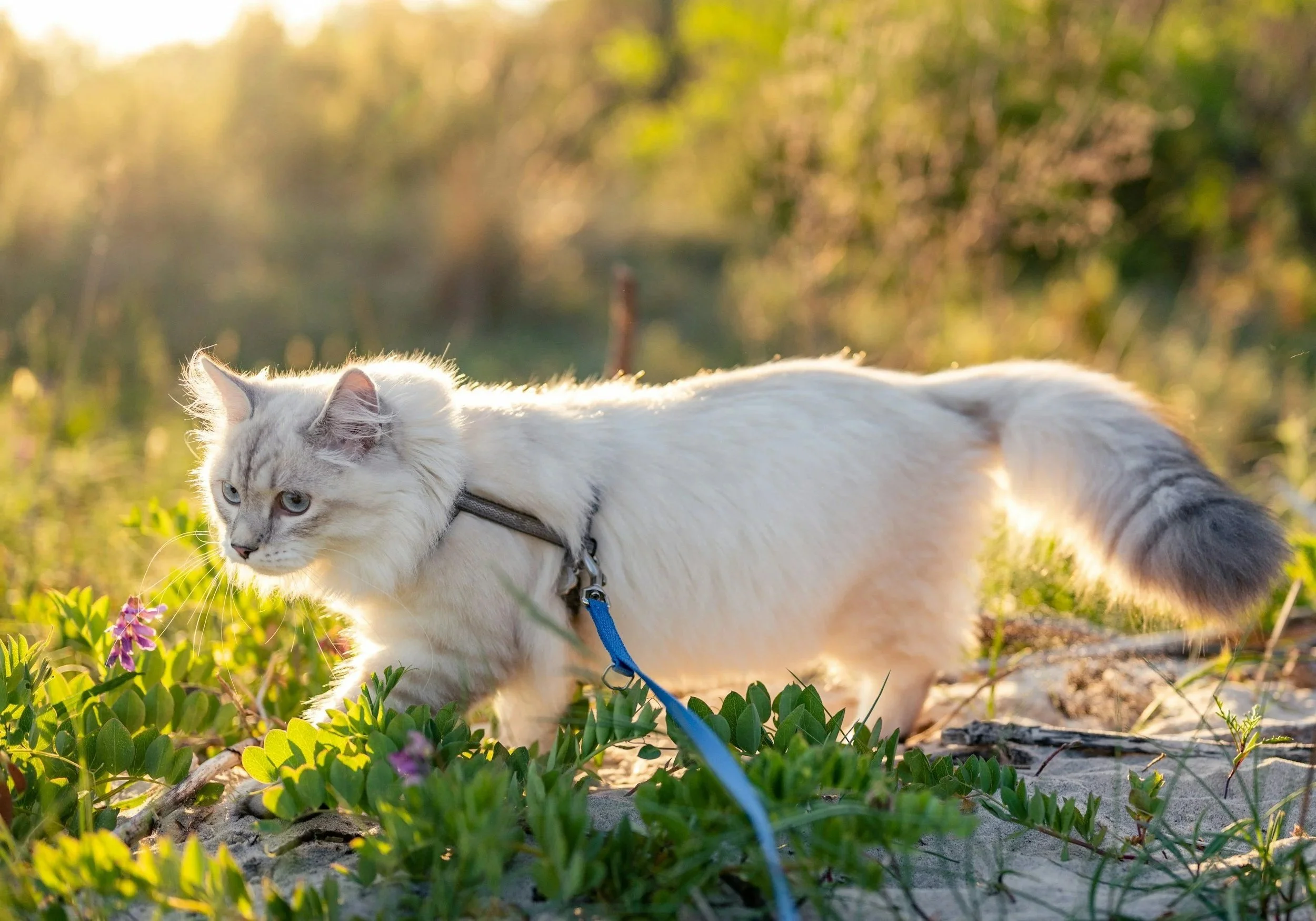
A GoodCat guide to catios, harness walks, carriers, backpacks, and gentle outdoor enrichment without letting your cat roam unsupervised.
Many cats are fascinated by the outside world.
They watch birds through the window. They sniff the air when the door opens. They sit in sunbeams, listen to leaves, chatter at squirrels, and study the yard like tiny serious scientists with whiskers.
It is natural to wonder if your cat might enjoy more fresh air, sunshine, and outdoor interest.
But outdoor time for cats needs care.
Free-roaming outdoors can expose cats to traffic, predators, fights with other animals, parasites, poisons, harsh weather, getting lost, and injuries. It can also create risks for birds and wildlife. For many cats, the safest life is indoors with thoughtful enrichment.
Still, some cats can enjoy the outdoors in protected ways.
A catio, screened porch, secure harness walk, stroller, carrier outing, or carefully chosen backpack may give a cat some of the sights, smells, and sunshine of the outside world while keeping them safer.
The goal is not to force adventure.
The goal is to offer safe choices and let your cat show you what they enjoy.
In this guide
Why unsupervised outdoor roaming is risky
How to tell whether your cat might enjoy outdoor time
Catios and screened spaces
Harnesses and leashes
Cat backpacks, strollers, and carriers
Yard safety and parasite protection
When outdoor time is not a good fit
1. Start with safety, not scenery
Outdoor time can be interesting for cats, but safety has to come first.
A cat outside without protection may face risks such as:
traffic
dogs or wild animals
fights with other cats
fleas, ticks, and parasites
toxic plants or chemicals
getting lost
weather extremes
injuries
theft or accidental trapping
panic escapes
Even confident indoor cats can become frightened outside. A loud truck, barking dog, unfamiliar person, or sudden movement may cause a cat to bolt.
That is why safe outdoor time usually means controlled outdoor time: enclosed, supervised, or securely contained.
GoodCat Tip
Outdoor enrichment should make your cat’s life safer and richer, not more dangerous.
2. Ask whether your cat actually wants outdoor time
Not every cat wants to go outside.
Some cats are curious and confident. Others are perfectly content watching the world from a window. Some cats who seem interested through the glass may become frightened once they are actually outdoors.
Your cat may be a good candidate for safe outdoor enrichment if they are:
curious about windows and doors
confident with new spaces
comfortable being handled
not easily panicked
interested in exploring
healthy enough for the activity
able to tolerate a harness, carrier, stroller, or enclosed space
A shy, elderly, fragile, anxious, or easily startled cat may prefer indoor enrichment, a window perch, or a screened view instead.
This should be about your cat’s temperament, not our idea of what should be fun.
3. A catio is often the safest outdoor option
A catio is an enclosed outdoor space for cats.
It can be as simple as a small window box enclosure or as elaborate as a screened patio, porch, or outdoor cat room. The key is that the cat can experience fresh air and outdoor sights without roaming freely.
Catios can offer:
sunshine
fresh air
bird and squirrel watching
climbing shelves
resting spots
safe sniffing
a sense of outdoor access
peace of mind for humans
A good catio should be secure, escape-proof, weather-aware, and built with materials that can withstand the outdoors. Check doors, latches, screens, gaps, flooring, and any connection to the house.
If you rent or cannot build a structure, smaller window catios or portable enclosures may be options, depending on your space and lease rules.
GoodCat Tip
A catio lets your cat enjoy the outside while still having walls between curiosity and danger.
4. A screened porch can be wonderful if it is truly secure
A screened porch can feel like a cat paradise, but only if it is safe.
Before allowing your cat onto a screened porch, check carefully:
Are the screens strong and intact?
Are there loose edges or gaps?
Can the cat push under or around the screen?
Do doors latch securely?
Are there holes near the floor or corners?
Are there toxic plants, chemicals, or sharp objects?
Can the cat climb to a risky spot?
Many ordinary screens are not designed to hold a determined or startled cat. If your cat is strong, excitable, or likely to climb the screen, you may need stronger pet-safe screening or additional barriers.
Supervision is still wise, especially at first.
5. Harness walks can work for some cats
Some cats can learn to enjoy a harness and leash.
But cat walking is not usually like dog walking. Many cats prefer sniffing, sitting, watching, creeping slowly, or investigating one small patch of grass for a very long time. The cat may not want to walk down the sidewalk. They may want to study a leaf for twelve minutes.
That is normal.
Harness walks work best when introduced slowly and gently.
The basic process:
Let your cat sniff the harness indoors.
Put it near favorite resting areas.
Try brief indoor wear without fastening tightly.
Gradually adjust the fit.
Let your cat move indoors while wearing it.
Add the leash indoors.
Practice before going outside.
Start outdoors in a quiet, enclosed, low-risk area.
Never attach a leash to a regular collar for walking. Cats can slip collars or injure themselves. Use a well-fitting cat harness designed for secure containment.
GoodCat Tip
A harness should be introduced as a slow invitation, not a surprise outfit.
6. Fit matters more than cuteness
A cat harness needs to be secure and comfortable.
A harness that is too loose may allow escape. A harness that is too tight may restrict movement or breathing. A harness that rubs, shifts, or scares your cat may make outdoor time unpleasant.
Look for:
cat-specific design
secure fit
adjustable straps
comfortable material
no pressure on the throat
no loose dangling parts
good reviews for escape resistance
correct sizing for your cat’s body
Even the best harness is not escape-proof in every situation. Cats can twist, back out, panic, or slip free if frightened. Stay alert and avoid busy, noisy, dog-heavy, or unfamiliar areas until you know how your cat responds.
7. Choose quiet outdoor places
For a cat, the outside world can be intense.
Start small.
A quiet fenced yard, calm patio, enclosed garden, or low-traffic area is better than a busy street, public park, or dog-filled path. The first outdoor experiences should feel boring to you and manageable to your cat.
Good beginner outdoor places are:
quiet
familiar
away from dogs
away from traffic
close to the house
easy to leave quickly
not too hot or cold
free from obvious hazards
Bring your cat back inside before they are overwhelmed. Ending early on a calm note is better than pushing too long.
8. Cat backpacks and strollers can be useful, but choose carefully
Cat backpacks and strollers can give some cats a safer way to experience outdoor sights and smells without walking on the ground.
They may be useful for:
confident cats who enjoy watching
cats who dislike walking but like fresh air
vet trips with less stress for some cats
short supervised outings
senior cats who cannot walk far
cats who feel safer enclosed
But not every cat enjoys being carried in a backpack or stroller. Some feel trapped, overheated, motion-sick, or frightened.
If you try one, look for:
good ventilation
secure closures
enough room to turn around
sturdy construction
shade from direct sun
comfortable base
escape-resistant zippers or clips
easy cleaning
no overheating risk
Introduce it indoors first. Let your cat explore it open, then try short calm sessions before going outside.
GoodCat Tip
A backpack or stroller should feel like a safe little lookout, not a moving trap.
9. Watch for heat, cold, and weather
Cats can overheat or become chilled.
Outdoor time should be avoided during extreme weather, including high heat, freezing cold, storms, strong wind, heavy rain, or very humid conditions.
Be especially careful with:
kittens
senior cats
flat-faced breeds
cats with heart or breathing problems
overweight cats
ill or recovering cats
dark-coated cats in direct sun
cats in backpacks or enclosed carriers
Backpacks, strollers, carriers, and catios can heat up quickly in sun. Shade and airflow matter.
If your cat is panting, drooling, weak, distressed, hiding, trembling, or trying desperately to escape, end the outing and seek veterinary advice if symptoms are concerning.
10. Think about fleas, ticks, and parasites
Outdoor exposure can increase parasite risk.
Before beginning regular outdoor time, ask your veterinarian about flea, tick, and parasite prevention that is safe and appropriate for your cat.
Do not use dog flea/tick products on cats unless your veterinarian specifically says the exact product is safe for cats. Some dog products can be dangerous to cats.
After outdoor time, especially in grassy or wooded areas, check your cat for ticks, burrs, debris, and anything stuck in the fur or paws.
Even protected outdoor time needs basic health precautions.
11. Avoid toxic plants and chemicals
Outdoor areas can contain things that are unsafe for cats.
Watch for:
toxic plants
pesticides
herbicides
fertilizers
rodent poisons
antifreeze
treated mulch
stagnant water
mushrooms
sharp objects
lawn chemicals
If you are using a yard, patio, or garden for cat time, check it carefully. Do not assume a space is safe just because it looks pretty.
If your cat chews plants, be especially cautious.
When in doubt, keep outdoor time limited to a more controlled area or ask your veterinarian about specific plant or chemical concerns.
GoodCat Tip
A safe outdoor space is not just enclosed. It is also free from things your cat should not eat, lick, or step in.
12. Keep identification current
Even with careful supervision, escapes can happen.
Make sure your cat has current identification before outdoor adventures.
Consider:
microchip registration
updated contact information
a breakaway collar with ID, if your cat tolerates it safely
recent clear photos of your cat
knowing who to call locally if your cat gets out
A harness, catio, carrier, or backpack reduces risk, but it does not make identification unnecessary.
Indoor cats who escape may become frightened and hide nearby, so preparation matters.
13. Respect wildlife
Cats are natural hunters.
Even well-fed cats may chase or catch birds, small mammals, reptiles, or insects. Protected outdoor time helps reduce harm to wildlife while still giving your cat enrichment.
A catio, enclosed porch, harness, stroller, or backpack lets your cat observe without roaming freely.
If you use bird feeders near windows or catios, keep them clean and placed thoughtfully. Birds should be able to feed safely, and your cat should be watching, not hunting.
A good outdoor setup respects both your cat and the small lives outside.
14. Know when outdoor time is not the right fit
Some cats are happier indoors.
Outdoor time may not be right for a cat who:
panics outside
fights the harness intensely
tries to bolt
becomes aggressive or highly stressed
has serious health issues
is extremely fearful
cannot tolerate carriers or enclosed spaces
lives in an unsafe outdoor environment
becomes frustrated by seeing animals they cannot reach
There is nothing wrong with indoor enrichment instead.
Window spots, puzzle toys, scratching posts, tunnels, play sessions, cozy beds, and safe climbing spaces can give indoor cats rich, happy lives.
GoodCat Tip
Safe indoor happiness is better than outdoor adventure that frightens your cat.
15. Make outdoor time a calm routine
If your cat enjoys safe outdoor time, keep it predictable.
A calm routine might look like:
harness practice indoors
short patio time on quiet mornings
supervised catio visits
stroller walks on calm paths
window catio time during mild weather
a few minutes outside followed by a treat or nap indoors
Keep sessions short at first. Watch your cat’s body language. End before they become tired, stressed, overheated, or overstimulated.
Outdoor enrichment should feel like a gentle addition to the day, not a big dramatic event.
16. Let your cat decide what counts as adventure
Humans may imagine adventure as walking trails, visiting parks, or exploring new places.
Your cat may define adventure as sitting under a chair on the patio and sniffing the breeze.
That counts.
A cat does not need a grand outdoor life to benefit from safe fresh air. For some cats, ten quiet minutes on a screened porch is plenty. For others, a catio becomes a favorite room. Some may learn to walk in a harness. Some may prefer a backpack lookout. Some may decide the window was better all along.
Listen to your cat.
Final thoughts
Outdoor time for cats should be safe, gentle, and chosen around the individual cat.
A catio, secure porch, harness, stroller, backpack, or supervised patio visit can offer fresh air and curiosity without the risks of free roaming. But not every cat needs or wants outdoor adventures, and that is okay.
The best outdoor enrichment gives your cat more joy without taking away their safety.
At GoodCat, we believe cats deserve rich lives full of comfort, curiosity, and care — whether they are watching birds from a sunny window, lounging in a catio, sniffing the breeze from a safe porch, or deciding that the best adventure is still the soft chair inside.
Every cat is a GoodCat.